
The Hidden Reason Your Chandelier Doesn't Look Premium at Night
Author:Admin Publish time: August 11, 2026 Origin: Site
Sometimes the problem isn't the chandelier. It's the light inside it.
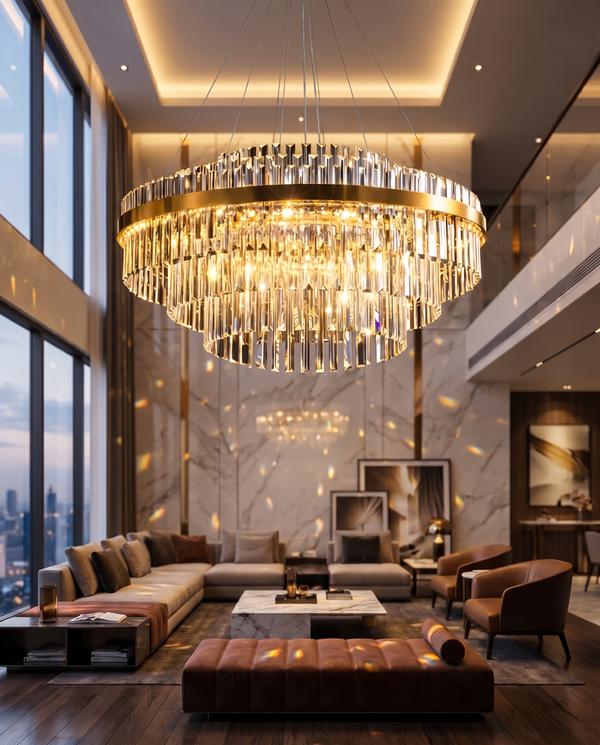
A chandelier can look exceptional during the day.
Hand-blown glass. Polished brass. Carefully balanced proportions. Beautiful detailing.
Then night comes.
You switch it on — and somehow, it no longer feels as premium as it did in the showroom.
The glass looks flatter.
The metal loses some of its richness.
The room feels brighter, but not necessarily more beautiful.
For designers, this can be frustrating because nothing appears to be technically wrong.
The fixture is beautiful. The lumen output is sufficient. The colour temperature on the specification sheet says 2700K.
So what changed?
The chandelier became dependent on its light source.
During the day, we see the object.
At night, we see the object through the light it creates.
And that makes the G9 or G4 lamp hidden inside a decorative fixture much more important than its size suggests.
A premium luminaire doesn't stop at the fixture. The light source is part of the design.
1. 2700K Does Not Automatically Mean “Warm and Premium”
One of the easiest mistakes in decorative lighting is to assume that choosing 2700K solves the atmosphere problem.
It doesn't.
Two G9 LEDs can both be labelled 2700K and still make the same chandelier look noticeably different.
Why?
Because perceived light quality depends on more than CCT.
For premium decorative lighting, designers should also consider:
- CRI
- R9
- colour consistency
- spectral quality
- DUV
- the way materials respond to the light
This becomes particularly visible with materials such as wood, brass, fabric, stone and skin tones.
A technically “warm white” lamp can still make these surfaces feel flat or slightly unnatural.
That is why high CRI and controlled colour quality matter more in decorative lighting than the specification sheet sometimes suggests.
2. One Good G9 Is Not Enough When the Chandelier Uses Twelve
A single lamp can look perfectly acceptable during sample testing.
Put twelve of them into one chandelier and the situation changes.
Suddenly, small colour differences become visible.
One lamp appears slightly greener.
Another looks warmer.
Another seems marginally brighter.
Individually, those differences may be difficult to notice.
Together, they affect the visual balance of the entire luminaire.
This is one reason colour consistency matters so much for chandeliers and multi-lamp decorative fixtures.
For premium applications, we normally recommend evaluating not only CRI and CCT, but also SDCM and finished-lamp consistency.
The question should not simply be:
“Does this G9 meet 2700K?”
A better question is:
“Will 12 of these lamps still look like one coherent lighting system?”
That is a very different quality standard.
3. The Chandelier May Be Dimmer — But the Atmosphere Isn't Warmer
This is where many LED replacements reveal their biggest difference from halogen.
Traditional halogen naturally becomes warmer when dimmed.
At full output, the light may appear around 2700K.
As it dims, the colour gradually moves toward warmer amber tones.
The room doesn't simply become darker.
Its mood changes.
A standard 2700K LED behaves differently.
100% → 2700K
50% → 2700K
10% → still approximately 2700K
Brightness decreases, but the colour remains almost unchanged.
For functional lighting, that may be completely acceptable.
For a chandelier above a dining table, hotel lobby or luxury residential space, it can feel strangely flat.
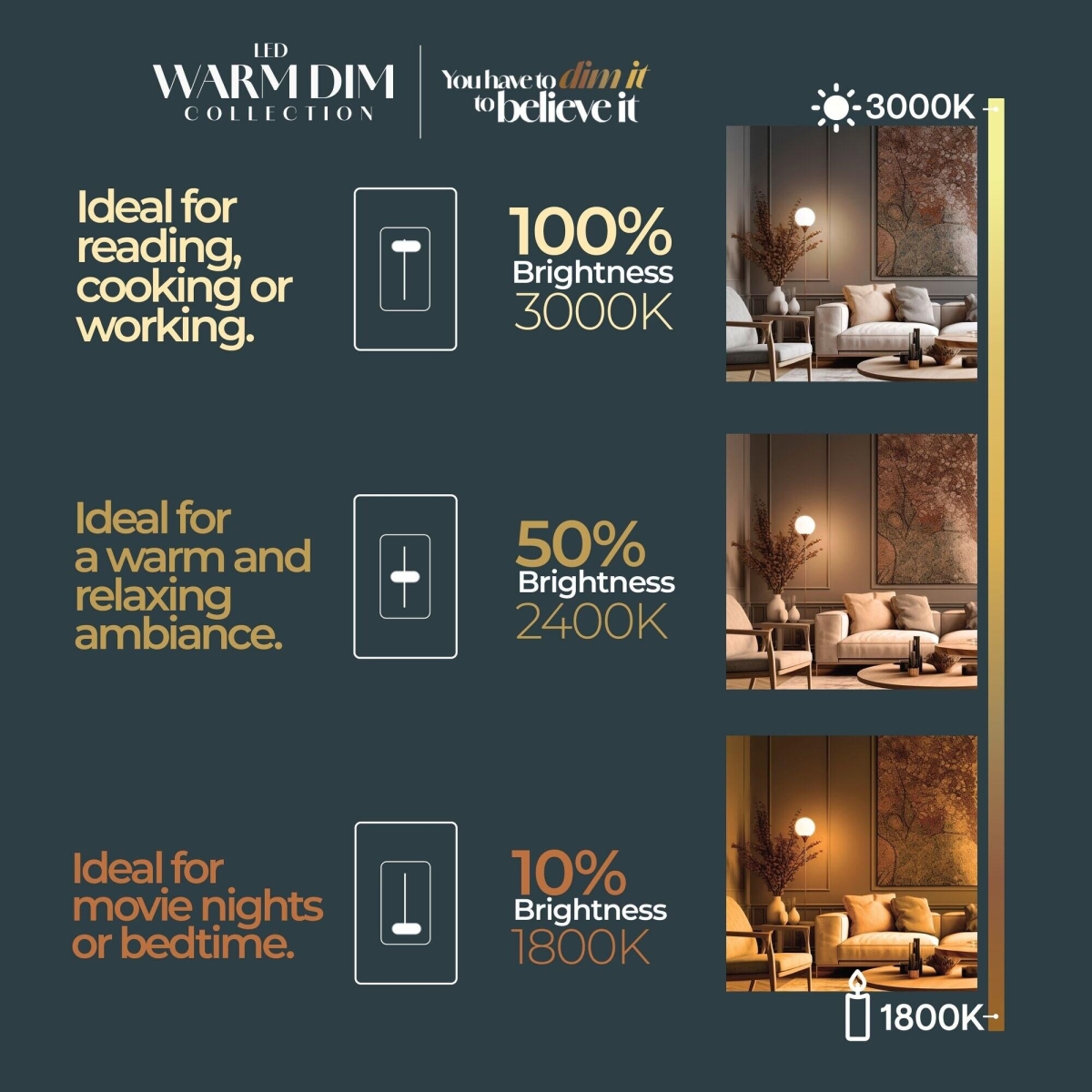
This is where Dim-to-Warm G9 LEDs become interesting.
A well-designed Dim-to-Warm source might transition approximately:
2700K → 2400K → 2200K → 1800K
as the light is dimmed.
The result is much closer to the emotional behaviour people associate with halogen, candlelight and evening interiors.
4. Low-Dim Performance Is Where Premium Quality Becomes Visible
Many LED lamps look good at 100%.
That is not necessarily where we should judge them.
Premium decorative lighting is often experienced at much lower levels.
Think about a restaurant after 8 p.m.
Or a hotel lounge.
Or a dining room after dinner.
The chandelier may be operating at only 10–30% of its maximum output.
And this is exactly where weaknesses in LED design often become visible:
- flicker
- unstable brightness
- sudden shut-off
- poor dimming range
- inconsistent lamps
- unnatural colour behaviour
In our development work with miniature G4 and G9 sources, we therefore pay particular attention to the low-dim range, rather than evaluating performance only at full output.
For designers, this leads to a simple but useful rule:
Don't approve a decorative LED at 100%. Dim it to where your customer will actually use it.
That test often tells you much more.
5. The Light Source Should Disappear — Not Compete With the Fixture
There is another problem unique to decorative lighting:
The lamp is often visible.
Inside a clear glass pendant or open chandelier, a bulky LED can immediately change the character of the fixture.
The designer may have spent months refining:
- glass dimensions
- proportions
- transparency
- reflections
- internal geometry
Then an oversized LED source is installed in the centre.
The technology suddenly becomes more visible than the design.
This is why miniature size remains important for G4 and G9 LED development.
The objective should not be to make the lamp visually impressive.
Quite the opposite.
The best miniature light source should almost disappear inside the luminaire.
The customer should notice the chandelier — not the electronics inside it.
6. More Lumens Can Actually Make a Premium Chandelier Look Worse
LED development has traditionally focused heavily on efficacy.
More lumens.
More lumens per watt.
Higher output from a smaller package.
Those are important engineering achievements.
But decorative lighting has a different priority.
A chandelier is not an industrial high-bay.
Too much brightness can increase:
- glare
- harsh reflections
- visible hotspots
- discomfort through transparent glass
Sometimes reducing lumen output while improving colour quality and optical comfort creates a significantly more premium result.
This is an important shift in how we think about miniature LEDs:
The best G9 is not necessarily the brightest G9.
It is the G9 that best supports the fixture's design intention.
What Should Designers Check Before Approving a G9 for a Premium Chandelier?
Here is the checklist we would use:
| Check | Why It Matters |
|---|---|
| Physical size | The lamp should fit without dominating the fixture |
| CRI / R9 | Helps materials and skin tones appear natural |
| Colour consistency / SDCM | Important when many lamps are visible together |
| Low-dim performance | Reveals flicker and instability |
| Dimmer compatibility | Lamp and dimmer must work as a system |
| Dim-to-Warm behaviour | Creates a warmer evening atmosphere |
| Glare / visual comfort | Especially important behind clear glass |
| Real fixture test | Final performance should be judged inside the luminaire |
And perhaps most importantly:
Do not evaluate the lamp only on a laboratory table.
Put it inside the actual chandelier.
Dim it.
Look at the glass.
Look at the surrounding materials.
Then decide.
What We Have Learned From Developing Miniature G4 & G9 LEDs
At FRI, working with miniature LED sources has taught us something quite simple:
Small lamps can have a disproportionately large effect on premium lighting.
This is why our development work around G4 and G9 increasingly focuses on the characteristics that designers actually experience in the finished fixture:
- CRI 95 options
- stronger R9 performance
- controlled colour consistency
- Dim-to-Warm solutions
- low-flicker performance
- dimmer compatibility
- miniature dimensions
- finished-lamp testing
The purpose isn't to put more specifications on a datasheet.
It is to reduce the gap between:
what the designer imagined
and
what the customer finally experiences at night.
The Real Test Happens After Dark
A premium chandelier should not only photograph beautifully when it is switched off.
It should become more beautiful when illuminated.
That requires us to stop treating the G9 lamp as an interchangeable component hidden inside the fixture.
In decorative lighting, the source influences the glass.
The glass influences the reflections.
The reflections influence the room.
And the room influences how people feel.
That is why the smallest component inside a chandelier can sometimes determine whether the finished product feels genuinely premium.
People may never notice the G9 lamp inside your chandelier.
But they will notice the atmosphere it creates.
FAQ
What is the best G9 LED for a chandelier?
There is no single best G9 for every chandelier. Designers should evaluate physical size, colour quality, SDCM, dimming behaviour, flicker, glare and dimmer compatibility inside the actual fixture.
Is CRI 90 enough for premium decorative lighting?
CRI 90 can work well, but higher-end applications may benefit from CRI 95+, stronger R9 performance and tighter colour consistency, particularly where materials, skin tones and multiple lamps are visible.
Why does my chandelier look different after replacing halogen with LED?
Standard LEDs can differ from halogen in spectral quality, dimming behaviour, glare and colour shift. Halogen naturally becomes warmer when dimmed, while standard LEDs normally maintain approximately the same CCT.
Is Dim-to-Warm better for chandeliers?
For hospitality, dining and residential applications where atmosphere is important, Dim-to-Warm can provide a more halogen-like transition from brighter warm white to very warm light at low dimming levels.
Why should G9 LEDs be tested inside the actual fixture?
Glass, thermal conditions, lamp position, dimmers and the number of lamps can all influence the final experience. A bench test cannot fully reproduce how the LED will perform inside the finished luminaire.